Kathleen Lei Limayo
Filipino women play an essential role in sustainable seafood production despite experiencing threats to their livelihood.
Marites Manzano, 50, puts on her goggles and scours for sea shells. She sees two sea cockles covered by dust, grabs and places them inside her net. By noon, Manzano arrives at her home after a half-day of ‘pangangati’ or catching of sea mantis and sea shells. Manzano is among the women fisherfolk in San Salvador Island, Mansinloc, Zambales who forages the coast daily to provide food for her family.

Although perceived as a male-dominated industry, women play an indispensable role in the production of seafood. According to the report by the Bureau of Fisheries and Aquatic Resources (BFAR) on the Philippine Fisheries Profile 2020, there are about 2 million registered Filipinos working in the seafood industry. An estimated forty-two percent of Filipino women in the country rely on small-scale fisheries for income.
Based on the Fisheries Report released by the Philippine Statistics Authority (PSA), the production in the fishing sector increased by 2% in 2022, compared to the previous year’s output totaling 4,339.89 metric tons of total fisheries. The fisheries sector contributes 1.3% to the Philippine Gross Domestic Product and provides almost 18% of the protein consumption of Filipinos.
According to FAO, women globally produce 60 to 80 percent of the food in developing countries. Women engage in post-harvest activities such as fish processing and fish selling, as well as preparing for baits and cooking food for their husbands.
Filipino women face challenges to sustainable fisheries and food production. Among the troubles they face are illegal fishing practices, restrictions in fishing disputes in the West Philippine Sea, and climate change.


Mother and Seaweed Entrepreneur
Mariam Makatill, 50, ties seedlings of seaweeds on a rope line in the shallow water of Bongao, Tawi-Tawi. By noon, the water had gone low and Makatill was able to move several lines of seaweeds closer to the shore.

Bangsamoro Autonomous Region in Muslim Mindanao (BARMM) hails itself as the top producer of seaweeds in the Philippines with Tawi-Tawi and Basilan contributing the most. According to the Fisheries Situation Report 2022, seaweed production in the country has increased by fifteen percent compared to the previous year. Seaweed tops the list of species that increased in production in 2022 together with skipjack, big-eye squad, yellowfin tuna, and squid.
According to Mukatill, seaweed farming is a profitable business. “Pag mag harvest kami ng mga one month, siguro mga kita namin mag 50K. Especially ng tumataas na yung presyo ng agal-agal. Yung iba mag 100K pa.” (When we harvest seaweeds in a month, we earn roughly 50,000 pesos. Especially since the price of seaweed is increasing. Others even earn as much as 100,000 pesos.)
Mukatill even expanded her seaweed farming business. Initially, she would harvest and plant seaweeds herself, but since seaweed farming is financially rewarding, she started purchasing and collecting other farmers’ crops to sell on larger bulks to bodega.
“Ang napundar ko sa seaweeds, nakagawa na ako ng bahay ko. Nakabili na din yung mga bata ng sasakyan nila tulad ng mga motor.” (Because of seaweed farming, I was able to construct my house. My kids are able to buy their motorcycle.) Seaweed farming has enabled Mukatill to make her own money, improve her living condition and provide for her kids.
“Ako bilang isang babae, isang nanay, talagang gusto ko kumita. Kahit nagtratrabaho ang asawa ko, gusto ko din mag trabaho. Para iba ang trabaho niya. Iba ang trabaho ko. Para marami ang kita namin. Talagang nag sasakripisyo ako.”
Mariam Mukatill
(As a woman and a mother, I really want to earn money. Even if my husband works for a living, I also want to work. He has his own job. I have my own work. So that we have more income.)
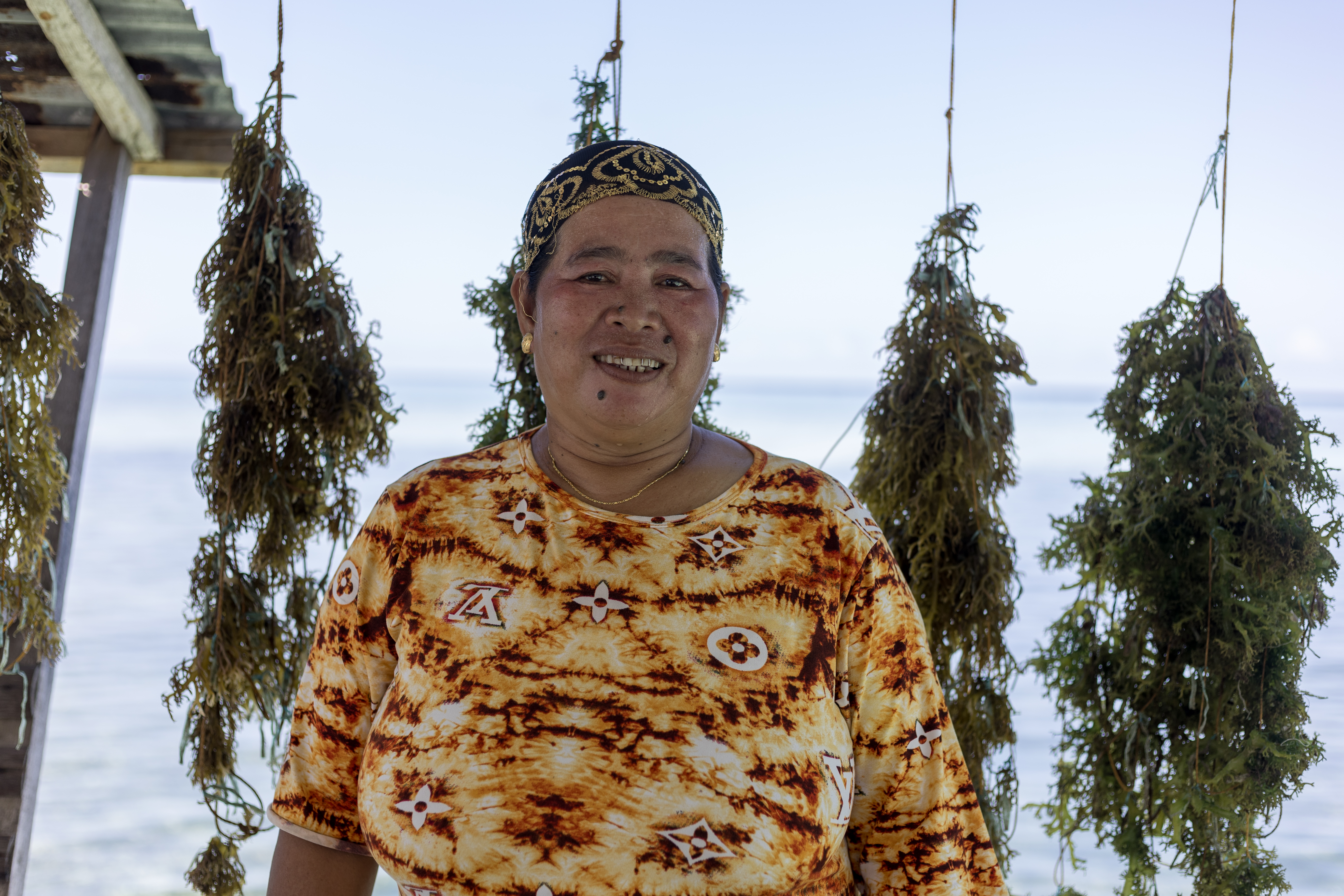
Despite the success of seaweed farming in Tawi-Tawi, the industry is still vulnerable to weather conditions. Climate change threatens seaweed farms in Tawi-Tawi. Strong currents damage seaweeds that are planted on deeper portions of the sea. During monsoon season, seaweed farmers in Tawi-Tawi bring their crops closer to the shore. Upon hearing news of typhoons or monsoons, Mukatill prioritizes saving her seaweeds by retreating them closer to the shore. However, this practice is not ideal because seaweeds are damaged when are more exposed to the sun.
Protector of the environment
When Super Typhoon Haiyan hit the Philippines in 2013, it ravaged the corals and marine biodiversity in the Leyte Gulf. The storm surge that happened ten years ago, not only inundated the coasts of Leyte and Samar and killed thousands of people, but it toppled coral reefs that needed rehabilitation.

Edith Mabini, 64, a member of the Comverse Fisherfolk Association (CFA) in Sulangan, Guiuan, Eastern Samar has long advocated for the protection of the environment. She convinced the women members of CFA to plant mangroves on the coast of Sulangan and conduct regular coastal clean-ups to ensure the protection of the environment.
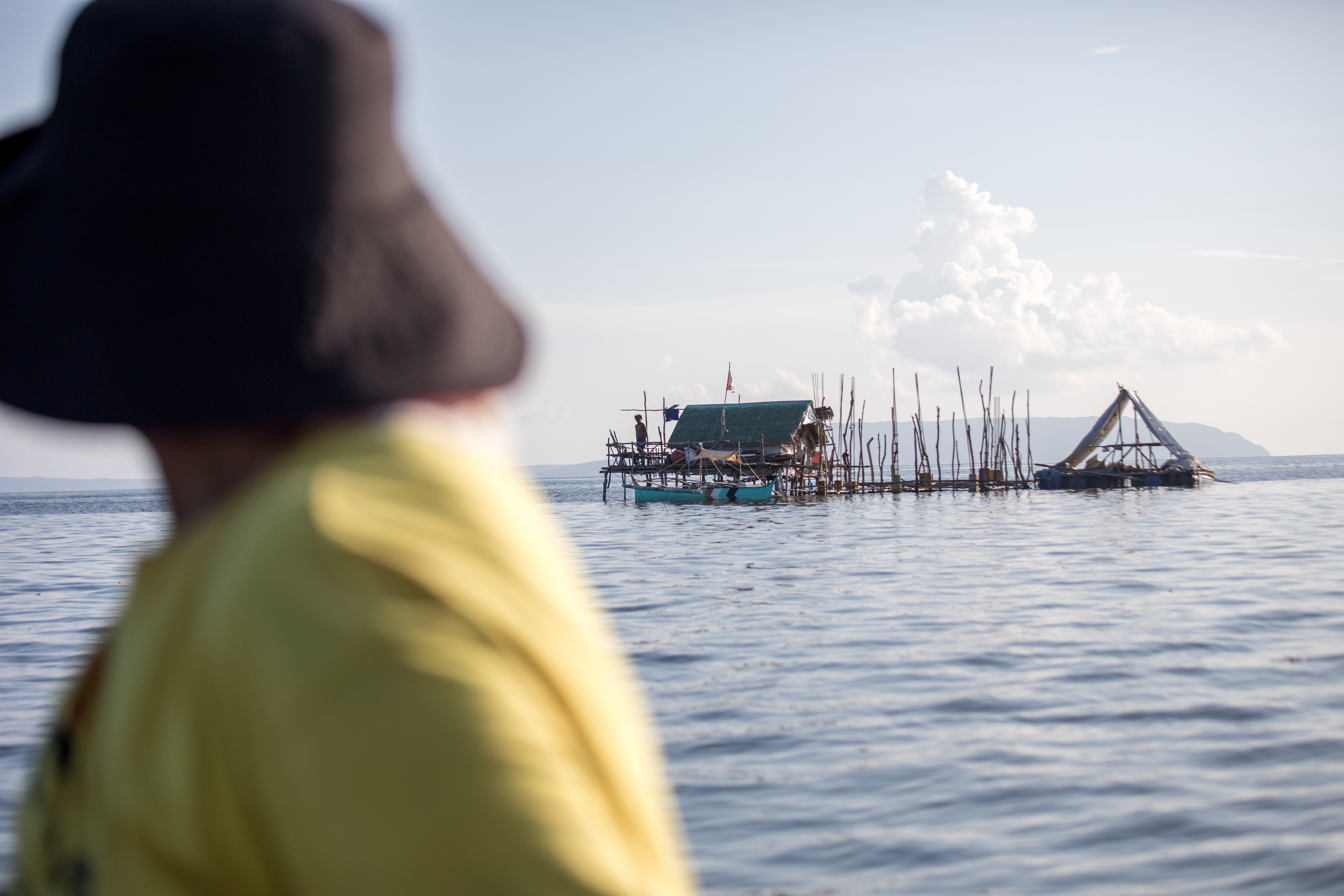
Illegal fishing practices of using dynamite and cyanide have also damaged the fisheries. To ensure sustainable fishing and increase the number of fishes, Mabini advocated for the creation of one of the marine fish sanctuaries in the Leyte Gulf. “Yung sa fish sanctuary, yan ako rin yang nag propose sa aming munisipyo na gawing fish sanctuary ang Inatraban reef.” (I proposed to our municipal government to declare Inatraban Reef as a marine sanctuary.) At first, she had difficulty convincing the fisherfolk in Sulungan to create a marine sanctuary. According to Mabini, people resisted the sanctuary because it would limit their fishing grounds. But after prayers, the Inatraban Reef of 800 square meters was officially declared as a marine sanctuary in 2019.
The Inatraban Reef became a sanctuary for fishes to lay their eggs. According to Mabini, the protected area has enabled fish to grow and produce more offspring. A vibrant coral reef and several clams can be seen on the seafloor of Inatraban Reef.
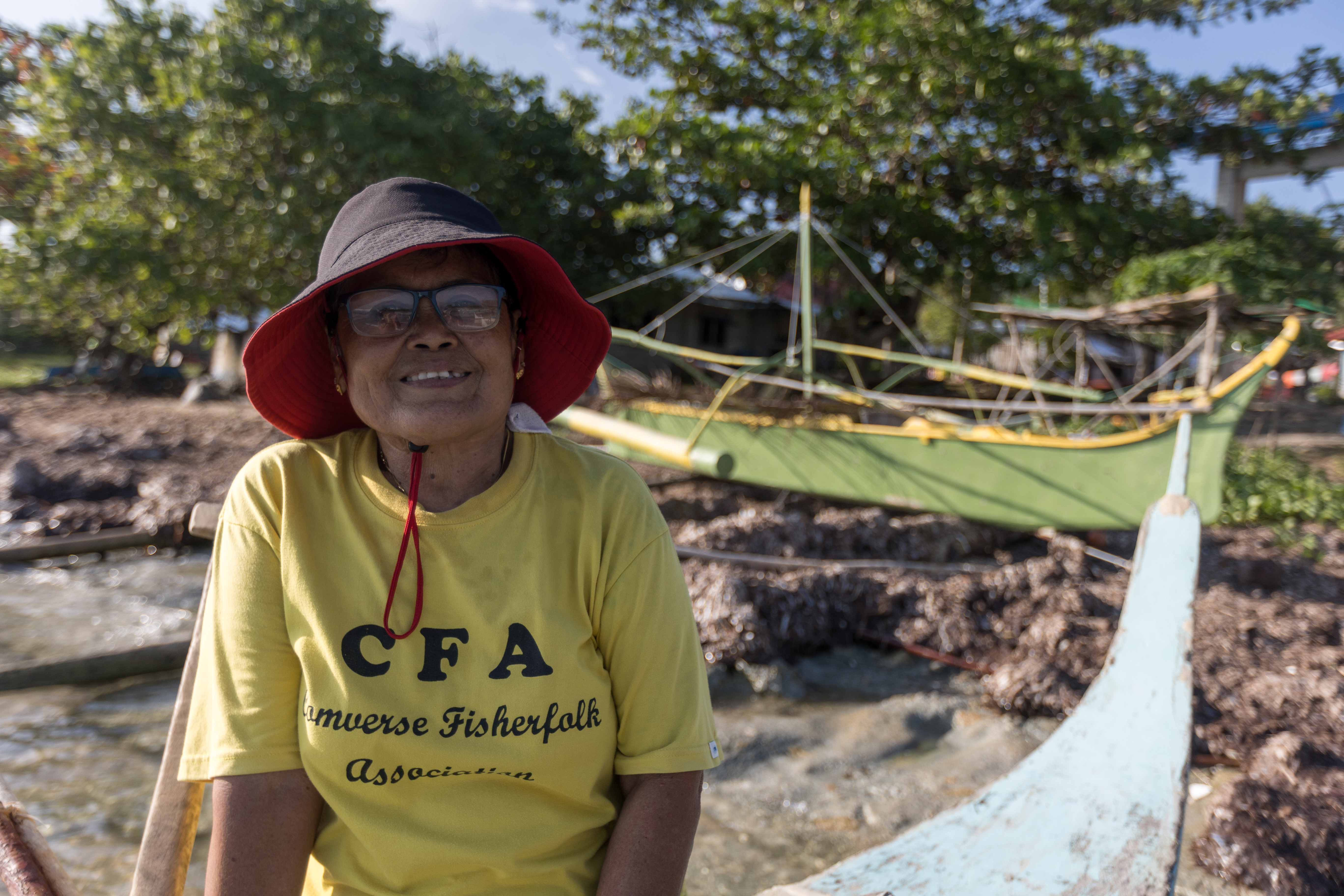
“Ito hindi lang yan para sa atin. Para yan sa kinabukasan, yung mga anak natin sa sunod pang henerasyon, sabi ko.” (The marine sanctuary is not just for us. It is for the future, for our offspring and the next generation.)
Edith Mabini
Fighting for the right to livelihood
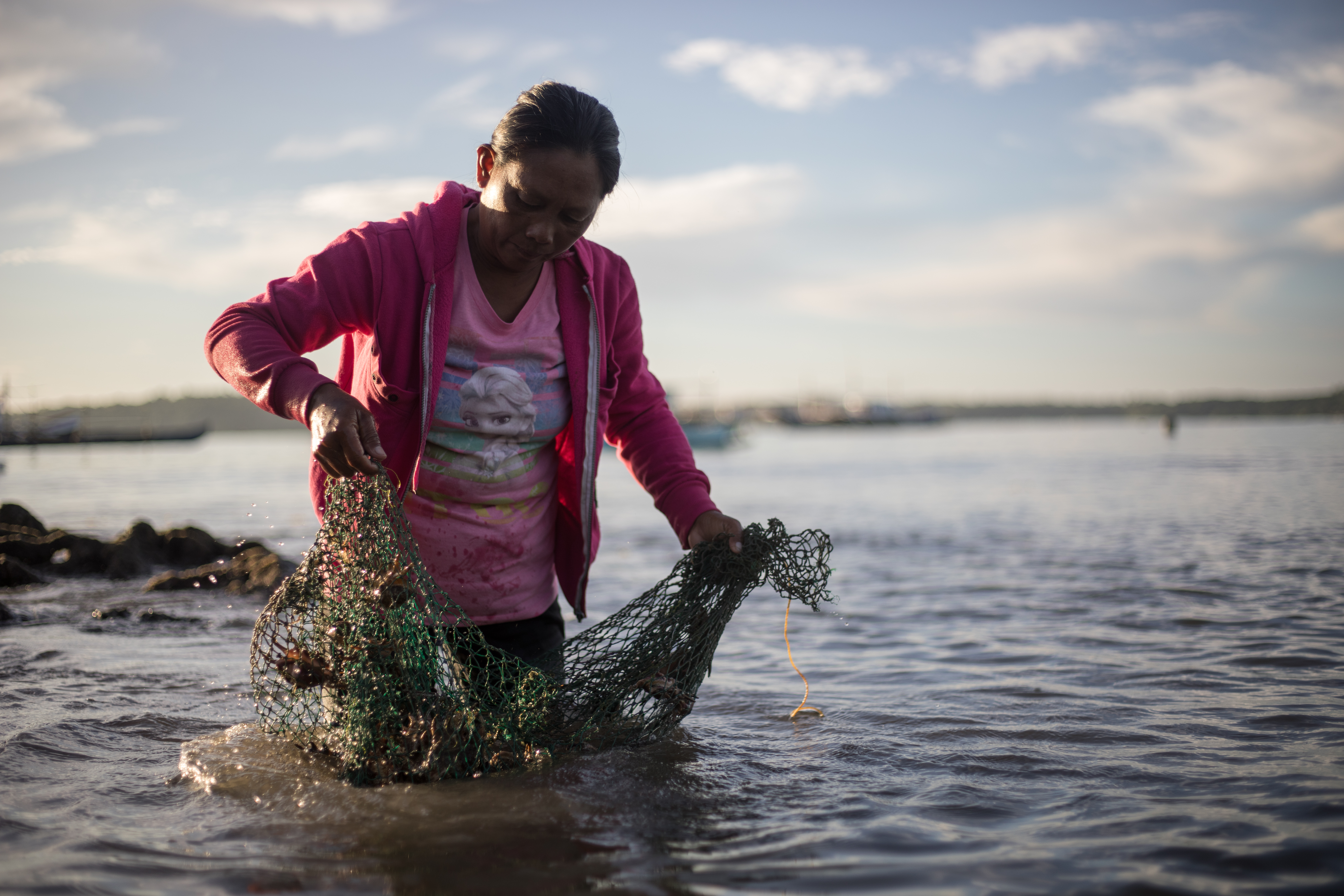
Marites Manzano and other women of Bigkis, a local organization established by fisherfolk in San Salvador Island take care of their families while going out to the sea to fish or forage the coast for shells. The women of San Salvador Island had to carry the burden of the decline in fishing due to the restrictions of fishing in the West Philippine Sea. The dispute in the Scarborough Shoal has left the residents of San Salvador island in fear of plying the West Philippine Sea because of Chinese vessels firing water cannons at them.
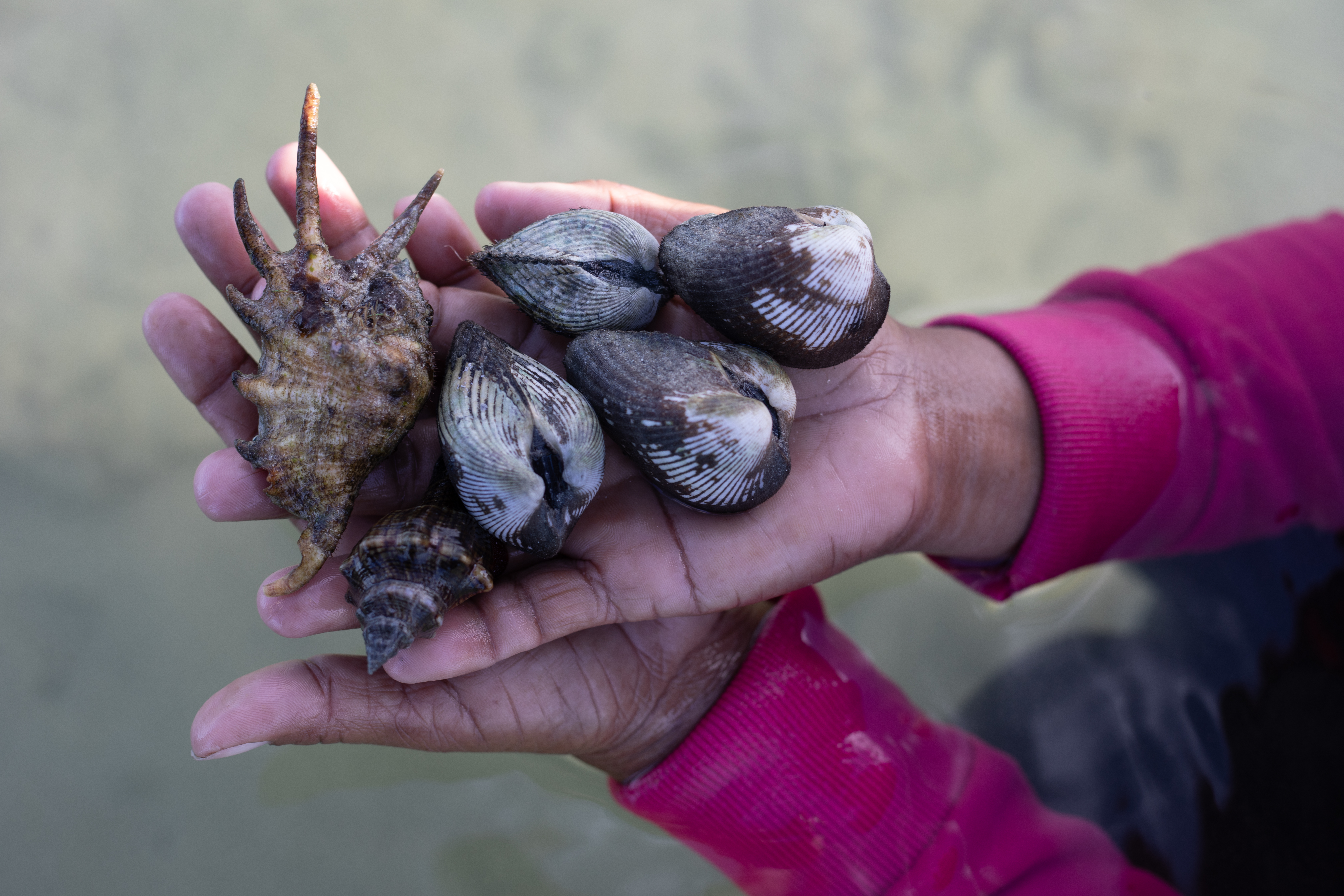
“Kelangan po namin magkaisa. Para hindi naman po kami masyadong kawawa. Kaya nagsama-sama po kami, isang grupo ng kakabaihan Bigkis para magkasama-sama po kami.. Kelangan pigilan yung mga nagbabawal para hindi kami maapektuhan. Para maging malaya po kami mangingisda.” (We need to be united. So that we don’t become the underdog. We need to unite, as one group of women organization, Bigkis, so we are together. We need to stop those who are preventing us so we are not affected. So that we are free to fish.”
Feeding Filipinos and taking care of families
For Edith, Marites, and Mariam, their livelihood must go on. Women fisherfolk carry not just the burden of taking care of their families, but of feeding Filipinos by producing seafood that are available to the market.


 KATHLEEN LEI LIMAYO